Microsoft ends support for Internet Explorer on June 16, 2022.
We recommend using one of the browsers listed below.
- Microsoft Edge(Latest version)
- Mozilla Firefox(Latest version)
- Google Chrome(Latest version)
- Apple Safari(Latest version)
Please contact your browser provider for download and installation instructions.



September 15, 2026
NTT, Inc.
NTT Establishes Technology to Accurately Track When and How Much CO₂ Algae Absorb
Enabling culture optimization to increase CO₂ absorption and improve biomass production efficiency
News Highlights:
- NTT established a measurement technology that uses sensors to calculate dissolved inorganic carbon (DIC)1 concentrations in microalgal cultures easily and accurately.
- NTT's proprietary correction technique reduced the maximum relative error with respect to measurements obtained using the conventional titration method2 from approximately 3,300% to approximately 8%.
- By continuously tracking changes in CO₂ absorption by microalgae3 over time, the technology enables the exploration and optimization of culture conditions that can increase CO₂ absorption.
Tokyo, Japan, September 15, 2026 — NTT, Inc. ("NTT") today announced the establishment of a technology that enables easy and highly accurate monitoring of changes in CO₂ absorption by microalgae over time. The technology reduced the maximum relative error with respect to measurements obtained using the conventional titration method from approximately 3,300% to approximately 8%. Measuring and evaluating CO₂ absorption by microalgae requires tracking changes in dissolved inorganic carbon (DIC), which exists in several forms in water. Conventional accurate DIC measurement requires culture fluid sampling, making continuous monitoring difficult. The new technology calculates DIC concentrations from measurements collected by CO₂ and other sensors without sampling the culture fluid for each measurement. This enables continuous tracking of changes in CO₂ absorption and is expected to help reduce environmental impact by supporting the exploration and optimization of culture conditions that increase CO₂ absorption.
The results were published in the international phycology journal Algal Research on August 12, 2026.
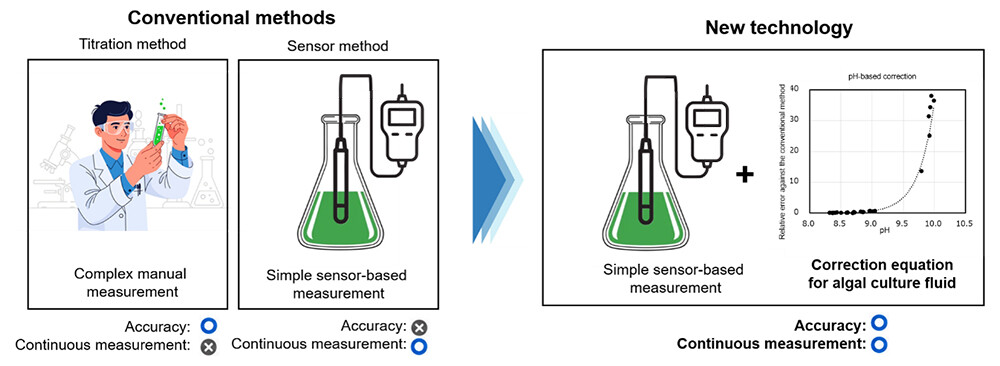 Figure 1. Comparison of conventional and new methods for measuring DIC dynamics in microalgal cultures
Background
Microalgae grow by using CO₂ and other forms of inorganic carbon through photosynthesis. Biomass4 derived from microalgae can be used as a feedstock for animal feed, fuels, and chemicals. Replacing a portion of conventional feedstocks with this biomass is expected to contribute to sustainable production and lower greenhouse gas emissions.
In culture fluid, CO₂ exists not only as dissolved CO₂ but also as bicarbonate and carbonate ions. Together, these forms are known as dissolved inorganic carbon, or DIC (Figure 2). Evaluating CO₂ absorption by microalgae therefore requires tracking the behavior of DIC as a whole as CO₂ changes form in water.
NTT previously proposed a concept that uses microalgae that grow by utilizing CO₂ as feed for fish and shellfish, aiming to address environmental issues while supporting food production.5 NTT has also conducted research and development to identify genes that improve the efficiency of CO₂ utilization by algae6 and to advance algal breeding technologies.7 Accurately tracking changes in DIC concentration during cultivation is essential for validating this concept and evaluating CO₂ absorption by microalgae.
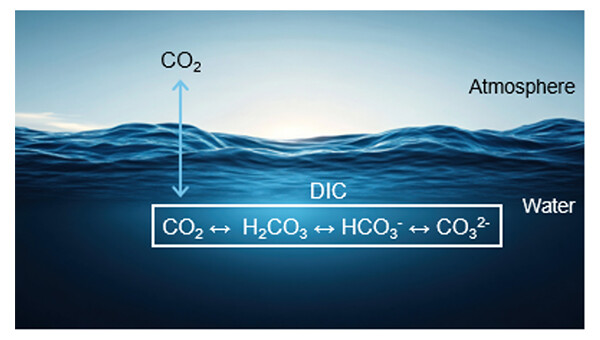 Figure 2. Forms of CO₂ in aqueous solution
The conventional titration method can measure DIC concentrations accurately, but it requires culture fluid sampling for every measurement. Because each measurement also takes time and effort, the method is not suitable for continuous data acquisition. Existing calculation methods based on sensor data and carbonate equilibrium8 enable continuous calculation. However, when applied directly to microalgal culture fluid, the resulting DIC values showed relative errors of up to approximately 3,300% with respect to conventional titration measurements, making accurate calculation of DIC concentrations difficult. NTT therefore developed a measurement technology that uses sensors to calculate DIC concentrations accurately and continuously during cultivation and to track changes over time.
Key Features of the Technology
■ Correction technique designed for pH changes specific to microalgal cultivation
Analysis of the error in sensor-based DIC calculations showed that the pH9 of the culture fluid increased from approximately 8.4 to approximately 10.0 as cultivation progressed (Figure 3). This rise in pH is considered to reflect a shift in the carbonate equilibrium of the culture fluid as microalgae consume DIC through photosynthesis. In microalgal culture fluid undergoing such a large pH change over a short period, direct application of existing carbonate-equilibrium calculations to sensor measurements was considered likely to produce substantial errors in calculated DIC concentrations.
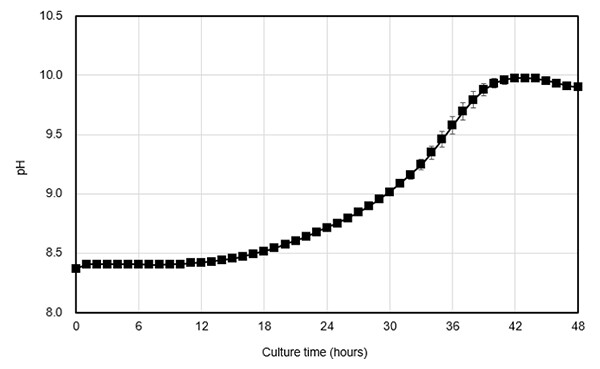 Figure 3. Change in pH of the algal culture fluid over time
The technology focuses on the difference between DIC concentrations measured by titration and those calculated from sensor measurements. NTT analyzed the relationship between relative error and pH, then developed a correction equation that adjusts calculated DIC concentrations according to pH (Figure 4, left).
■ Correction reduces maximum relative error from approximately 3,300% to approximately 8%
Applying the correction equation reduced the relative error of calculated DIC concentrations with respect to titration measurements from a maximum of approximately 3,300% before correction to a maximum of approximately 8% after correction (Figure 4, right). The correction equation has been confirmed to be effective in a laboratory environment using a 5 L culture bottle at 25℃ and within a pH range of 8 to 10. These results confirm that DIC concentrations can be calculated easily and accurately from sensor data.
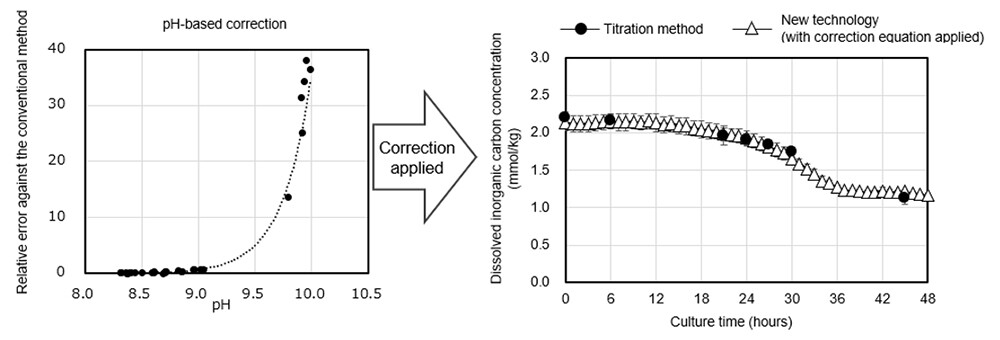 Figure 4. pH-based correction of calculated DIC concentrations and its effect
Application Example
NTT calculated the amount of carbon contained in DIC in the culture fluid from the corrected DIC concentration and added it to the amount of carbon contained in CO₂ in the air inside the culture vessel. NTT then compared a microalgal culture with an algae-free control under alternating 12-hour light and dark periods10 to evaluate changes in the amount of carbon in the culture system associated with CO₂ utilization by microalgae (Figure 5). During the light period, the amount of carbon decreased in a manner consistent with CO₂ absorption through microalgal photosynthesis. During the dark period, photosynthesis stopped and a different pattern was observed, reflecting effects including respiration.
The results confirm that the technology can continuously and accurately capture changes over time in the amount of carbon associated with microalgal CO₂ absorption under different light conditions.
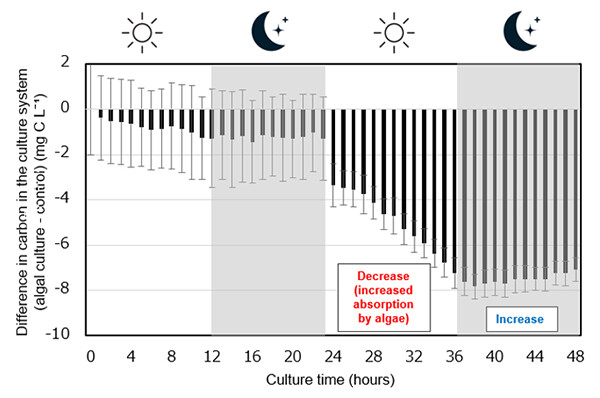 Figure 5. Change in the amount of carbon in the culture system over time under alternating light and dark periods
Negative values indicate that the amount of carbon in the culture system was lower in the algal culture than in the control.
Future Development
NTT will further evaluate the technology under a wider range of conditions, including different algal species and culture conditions that reflect commercial production, to expand its applicability.
Time-series DIC concentration data obtained using the technology can identify conditions under which microalgae actively absorb CO₂ and the timing of declines in CO₂ absorption. Optimizing culture conditions based on this information is expected to increase CO₂ absorption by microalgae and improve biomass production efficiency. By combining the technology with environmental control technologies built into cultivation systems and the cultivation expertise of algae producers, NTT aims to enable more advanced culture management, increase productivity, and contribute to the industrial use of algal biomass.
Related Press Releases
- November 12, 2021, "NTT and RFI to start demonstration experiment with the aim of reducing carbon dioxide in the ocean"
(https://group.ntt/en/newsrelease/2021/11/12/211112a.html) - September 13, 2022, "Start of demonstration experiment of algal breeding technology to solve climate change issues"
(https://group.ntt/en/newsrelease/2022/09/13/220913a.html) - February 9, 2023, "Identification of genes that dramatically improve carbon dioxide absorption in algae"
(https://group.ntt/en/newsrelease/2023/02/09/230209c.html) - July 4, 2024, "Established the world's first algal breeding technology using neutron beam irradiation"
(https://group.ntt/en/newsrelease/2024/07/04/240704a.html) - July 7, 2026, "NTT Successfully Breeds Diatoms with Simultaneously Enhanced Levels of Five Functional Fatty Acids, Including DHA and EPA"
(https://group.ntt/en/newsrelease/2026/07/07/260707a.html)
Notes
1Dissolved inorganic carbon (DIC): A collective term for inorganic carbon dissolved in water. It exists mainly as dissolved CO₂, bicarbonate ions, and carbonate ions.
2Titration method: A chemical analysis method in which a reagent of known concentration is added to a sample and the amount of a component in the sample is determined from the amount of reagent required for the reaction.
3Microalgae: A collective term for microscopic algae whose individual cells are difficult to see with the naked eye. Like plants, many microalgae grow by using CO₂ and other forms of inorganic carbon through photosynthesis.
4Biomass: A collective term for resources derived from living organisms. In this release, the term refers primarily to microalgal cells and useful components obtained from them, including proteins, lipids, and carbohydrates.
5https://group.ntt/en/newsrelease/2021/11/12/211112a.html
6https://group.ntt/en/newsrelease/2023/02/09/230209c.html
7https://group.ntt/en/newsrelease/2026/07/07/260707a.html
8Carbonate equilibrium: A state in which dissolved CO₂, bicarbonate ions, carbonate ions, and other forms coexist in water while interconverting. Their relative proportions depend mainly on pH and are also affected by temperature, salinity, and other factors.
9pH: A measure of the acidity or alkalinity of an aqueous solution. A pH near 7 is neutral; higher values indicate greater alkalinity and lower values indicate greater acidity.
10Light and dark periods: The light period is the period during which the culture is illuminated, and the dark period is the period without illumination. In this study, 12-hour light and 12-hour dark periods were alternated.
About NTT
NTT is a leading global technology innovator, providing a broad range of services to both consumers and businesses. As a mobile operator and provider of infrastructure, networks, and services, NTT is dedicated to promoting a sustainable future through cutting-edge innovations. Our portfolio includes business consulting, AI-powered solutions, application services, global networks, cybersecurity, data center and edge computing, all supported by our deep global industry expertise. Generating over $90 billion in revenue and employing 340,000 professionals, we allocate 30% of our annual profits to fundamental research and development. With operations spanning more than 70 countries and regions, our clients include over 75% of Fortune Global 100 companies, alongside thousands of enterprises, government organizations, and millions of consumers.
Media Contact
NTT, Inc.
NTT Information Network Laboratory Group
Public Relations
Inquiry Form
Information is current as of the date of issue of the individual press release.
Please be advised that information may be outdated after that point.


NTT STORY
WEB media that thinks about the future with NTT