Microsoft ends support for Internet Explorer on June 16, 2022.
We recommend using one of the browsers listed below.
- Microsoft Edge(Latest version)
- Mozilla Firefox(Latest version)
- Google Chrome(Latest version)
- Apple Safari(Latest version)
Please contact your browser provider for download and installation instructions.



July 7, 2026
NTT, Inc.
NTT Successfully Breeds Diatoms with Simultaneously Enhanced Levels of Five Functional Fatty Acids, Including DHA and EPA
— Accelerating the development of sustainable next-generation aquaculture feed without reliance on fishmeal and fish oil derived from natural resources —
Key Points:
- A breeding approach for diatoms1, a group of globally important algae as aquaculture feed, successfully increased the levels of five functional fatty acids2, including DHA3 and EPA4, simultaneously. The resulting strain showed up to 1.8-fold higher fatty acid content per cell than the original strain.
- This approach enables substantial increases in multiple functional fatty acids while maintaining a well-balanced fatty acid composition in feed. Conventional breeding methods5, which increase the level of a specific fatty acid such as DHA or EPA, often reduce the overall fatty acid balance.
- Utilization of the developed diatom strain6 as a highly functional feed ingredient is expected to accelerate the development of aquaculture feed that can replace fishmeal and fish oil, contributing to the realization of a more sustainable fisheries and aquaculture industry.
TOKYO, July 7, 2026 — NTT, Inc. (Headquarters: Chiyoda-ku, Tokyo; President and CEO: Akira Shimada; hereinafter "NTT") has successfully bred a diatom strain with simultaneously enhanced levels of five functional fatty acids, including DHA and EPA, that are essential components of aquaculture feed, using its proprietary breeding technology.
Conventional approaches have faced the challenge that increasing the level of a specific fatty acid often disrupts the overall balance of other fatty acids. This achievement overcomes that limitation by enabling simultaneous enhancement of multiple key fatty acids while maintaining a balanced fatty acid profile.
This developed technology is expected to accelerate the commercialization of algae-derived feed ingredients and provide a foundation for the development of sustainable aquaculture feed that does not rely on fishmeal or fish oil.
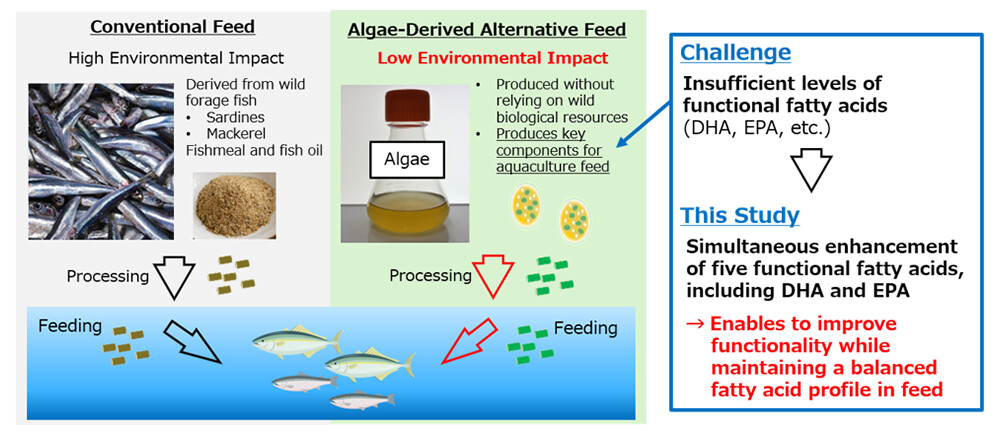 Figure 1. Overview of algae-derived alternative feed, key research and development challenges, and the achievement of this study.
Background
Global demand for seafood continues to grow, driven by population growth and changing dietary preferences. At the same time, wild fisheries that depend on natural marine resources are becoming increasingly unstable due to environmental changes, including climate change. Against this backdrop, aquaculture has expanded rapidly and now accounts for approximately 60% of the global seafood supply7.
Aquaculture depends on feed, and fishmeal and fish oil, the primary ingredients in conventional aquaculture feed, are largely derived from wild-caught forage fish. These small pelagic fish play a critical role in maintaining marine ecosystems, and excessive harvesting increases environmental pressure on ocean resources. As a result, there is a growing need for sustainable alternatives to fishmeal and fish oil.
Diatoms are a promising alternative feed ingredient because they can be cultivated without relying on wild biological resources and naturally produce functional fatty acids such as DHA and EPA, which are essential for aquaculture feed. However, further increasing the content of these fatty acids is necessary for the practical use of diatoms as a replacement for fishmeal and fish oil. To address this challenge, this study aimed to develop a diatom strain that could serve as a sustainable alternative to conventional fishmeal and fish oil.
Key Features of the Technology
Previous breeding research on diatoms has primarily focused on increasing the levels of individual fatty acids, such as DHA and EPA, mainly through gene recombination. However, fatty acid biosynthesis is governed by interconnected metabolic pathways, and increasing the level of one specific fatty acid is generally known to affect the levels and composition of other fatty acids. As a result, the overall fatty acid balance required for high-quality aquaculture feed may be compromised.
This study focused on Chaetoceros gracilis8, a marine diatom widely used as live feed in aquaculture. Genetic mutations9 were introduced into this diatom using NTT's proprietary technology. A new screening strategy that was not limited to a single target fatty acid was then established, enabling the identification of candidate strains with improved overall fatty acid characteristics.
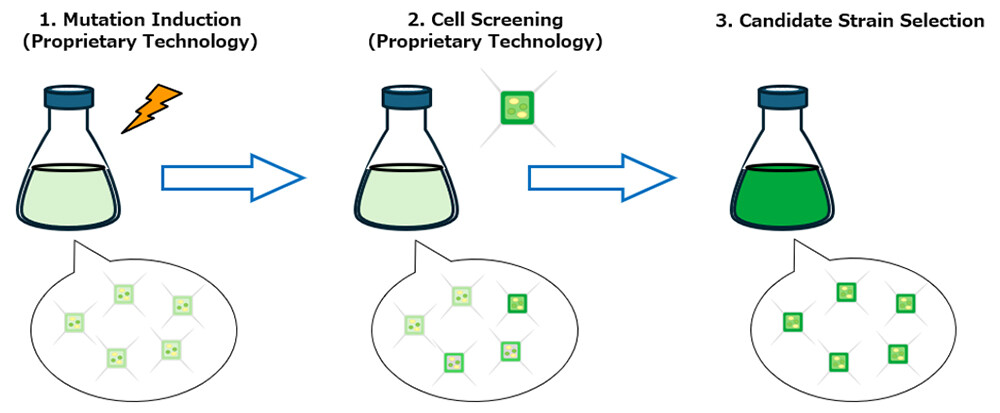 Figure 2. Breeding workflow for the diatom strains.
Breeding Results
Analysis of the fatty acid composition and content of the selected strains demonstrated simultaneous increases in multiple functional fatty acids. In addition to DHA and EPA, which are essential for fish and shellfish, elevated levels of α-linolenic acid10, dihomo-γ-linolenic acid11, and linoleic acid12, all of which play important roles in growth and physiological functions, were also observed. The content of these functional fatty acids was up to 1.8-fold higher than that of the original strain.
Another key advantage of the developed strains is that they were produced without the use of gene recombination and are therefore not subject to regulations governing genetically modified organisms (GMOs). This significantly reduces regulatory requirements, such as approval and notification procedures, facilitating commercialization and practical implementation.
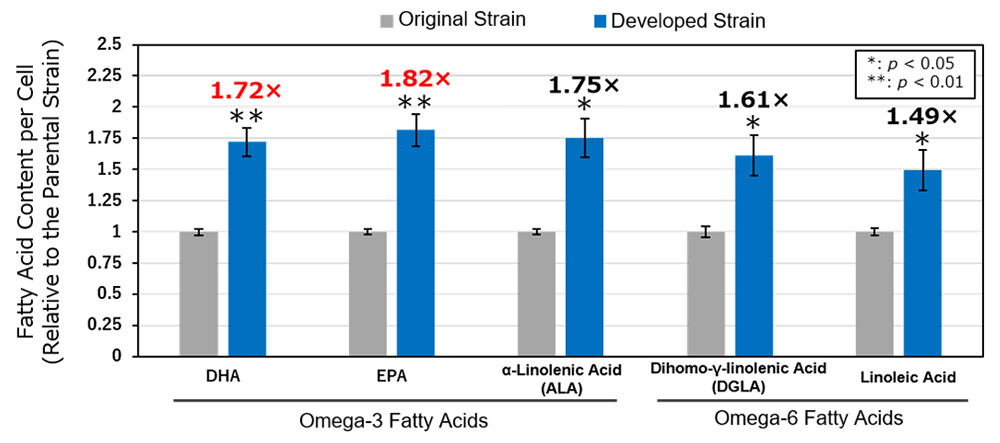 Figure 3. Comparison of fatty acid content between the original strain and the developed strain.
Future Outlook
The newly developed diatom strains have the potential to serve as key feed ingredients that support the transition from aquaculture feed dependent on natural marine resources to more sustainable alternatives. Future efforts will focus on accelerating the performance evaluation of the feeds incorporating these diatom strains.
The functional fatty acids enriched in the developed strains are also important ingredients in high-value nutritional supplements, creating opportunities for applications beyond aquaculture feed. In addition, the breeding technology developed in this study is expected to serve as a versatile platform for improving the nutritional value of other algal species.
By expanding this technology to additional algal species and broadening its range of applications, the technology is expected to promote the use of high-value algal materials across diverse industries while contributing to further reductions in environmental impact.
Related Press Releases
November 12, 2021: NTT and RFI to start demonstration experiment with the aim of reducing carbon dioxide in the ocean
February 9, 2023: Identification of genes that dramatically improve carbon dioxide absorption in algae
July 4, 2024: Established the world's first algal breeding technology using neutron beam irradiation
1Diatoms: A group of microalgae estimated to contribute up to 20% of the Earth's primary production. In the aquaculture industry, diatoms are widely used as feed, particularly during the seed and larval production stages.
2Functional fatty acids: Fatty acids that exert regulatory effects in living organisms and may contribute to maintaining health as well as preventing or ameliorating disease.
3DHA: Docosahexaenoic acid. A functional fatty acid involved in the growth, immune function, and stress responses of fish and shellfish.
4EPA: Eicosapentaenoic acid. A functional fatty acid involved in the growth, immune function, and inflammatory responses of fish and shellfish.
5Breeding: The process of improving organisms for desirable traits by utilizing genetic variation.
6Strain: A genetically distinct line or population of microorganisms or microalgae.
7The State of World Fisheries and Aquaculture 2024.
8Chaetoceros gracilis: A unicellular planktonic marine diatom that is widely used worldwide as feed for shrimp larvae and bivalves.
9Genetic mutation: A change in the DNA sequence of a gene. Such mutations can alter the function of the proteins encoded by the affected genes.
10α-Linolenic acid (ALA): A fatty acid that serves as a precursor for the biosynthesis of DHA and EPA, helping to compensate for deficiencies in these fatty acids.
11Dihomo-γ-linolenic acid (DGLA): A functional fatty acid that has attracted increasing research interest. Studies in humans suggest that it may have anti-inflammatory and anti-allergic properties.
12Linoleic acid: A fatty acid involved in the growth and lipid metabolism of fish and shellfish.
About NTT
NTT is a leading global technology innovator, providing a broad range of services to both consumers and businesses. As a mobile operator and provider of infrastructure, networks, and services, NTT is dedicated to promoting a sustainable future through cutting-edge innovations. Our portfolio includes business consulting, AI-powered solutions, application services, global networks, cybersecurity, data center and edge computing, all supported by our deep global industry expertise. Generating over $90 billion in revenue and employing 340,000 professionals, we allocate 30% of our annual profits to fundamental research and development. With operations spanning more than 70 countries and regions, our clients include over 75% of Fortune Global 100 companies, alongside thousands of enterprises, government organizations, and millions of consumers.
Media Contact
NTT, Inc.
NTT Information Network Laboratory Group
Public Relations
Inquiry Form
Information is current as of the date of issue of the individual press release.
Please be advised that information may be outdated after that point.


NTT STORY
WEB media that thinks about the future with NTT