Microsoft ends support for Internet Explorer on June 16, 2022.
We recommend using one of the browsers listed below.
- Microsoft Edge(Latest version)
- Mozilla Firefox(Latest version)
- Google Chrome(Latest version)
- Apple Safari(Latest version)
Please contact your browser provider for download and installation instructions.



Cows lying down in the field? Perhaps your joints are aching a bit and you think it’s about to rain? Can you smell rain approaching? There were a multitude of ways we used to try to predict what weather we’d be enjoying tomorrow. But things are a bit different now; modern weather forecasting runs on data.
In contrast to the ways we used to look at pine cones closing or soot falling down the chimney, nowadays we have the benefit of countless observations collected from satellites, weather stations, ships, aircraft, and ocean buoys to forecast whatever we want, from tomorrow's total hours of sunshine to the path of a major typhoon.
Insufficient Data
And yet, some of the most important parts of weather systems are still frustratingly difficult for us to observe. There are blind spots. Many of them lie over the ocean.
The seas surrounding Japan, particularly the East China Sea, play a critical role in the development of typhoons, heavy rainfall, and linear precipitation bands—long corridors of intense rain that can trigger floods and landslides. But collecting detailed measurements from these regions is challenging: although satellites give a view from above, many of the interactions that influence weather take place much closer to the ocean surface, where heat, moisture, and momentum are constantly exchanged between sea and sky.
Observing the Atmosphere and Ocean Directly
In response, NTT, the Okinawa Institute of Science and Technology (OIST), and Japan's Meteorological Research Institute (MRI) are developing new ways to observe the atmosphere and ocean directly. Their goal is to create a better picture of how extreme weather develops and, ultimately, provide data that could support more accurate forecasting.
The Ocean Surface
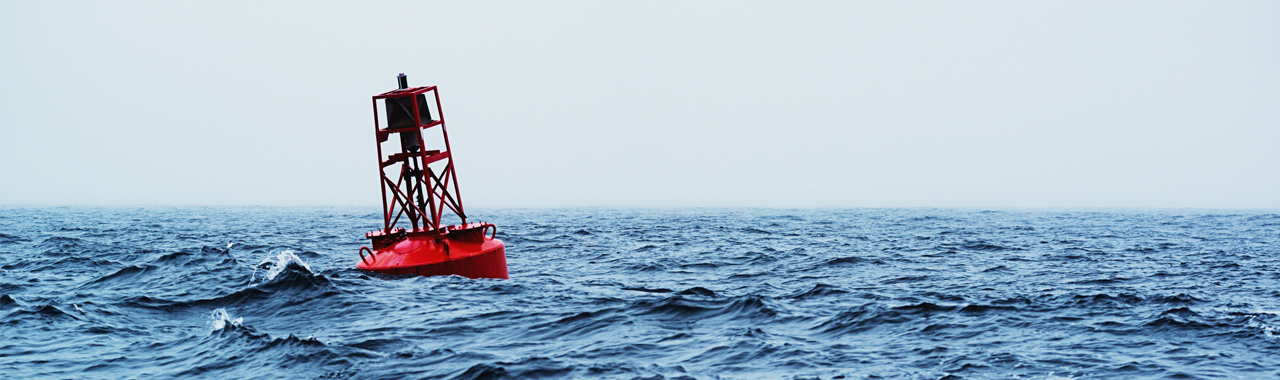
One part of their work involves autonomous surface vehicles (ASVs) and drifting buoys. The two technologies operate at sea without onboard crews and carry instruments that are able to continuously measure conditions at the ocean surface. Unlike traditional research vessels, they can remain in position for extended periods and make observations in areas where routine measurements would otherwise be difficult or expensive.
During their initial 2025 observation campaign, NTT, OIST and MRI researchers deployed the systems in waters around Okinawa. The ASVs successfully approached Typhoons 7 and 8, while drifting buoys collected observations during Typhoons 12 and 23. The project gathered valuable measurements from the ocean surface during multiple storms, providing data from locations that are rarely observed directly.
And the data gave several important insights. The observations revealed rapid pressure changes and active exchanges of heat and momentum between the ocean and atmosphere as typhoons approached—these processes help determine how storms gain or lose strength. The information gathered is now being analyzed to improve understanding of what influences typhoon development and intensity. Some of the work is already beginning to pay off: when MRI researchers plugged this data into their experimental models, they found that accounting for sea-surface cooling greatly improved the accuracy of maximum wind speed forecasts.
A Bigger, Wider Campaign
The current observation campaign is expanding both geographically and technologically. During the early summer months, researchers will focus on the East China Sea, where warm, moisture-laden air flows toward Kyushu. By measuring the movement of this water vapor, NTT, OIST and MRI researchers hope to improve understanding of how linear precipitation bands, long, narrow areas of very heavy rain that can remain over the same place for hours, form and develop. Later in the season, observations will return to the waters around Okinawa to continue typhoon research.
At the same time, NTT is testing a new atmospheric sensing system based on balloons and designed to collect detailed measurements from parts of the atmosphere where observations are often limited.
Dropsondes
Once in the correct position, the balloons will release numerous small weather sensors known as “dropsondes.” As they descend through the atmosphere, the sensors will record information such as temperature, humidity, and air pressure and transmit data using low-power wireless communications, allowing researchers to build detailed profiles of atmospheric conditions above the ocean.
Taken together, the autonomous ocean platforms and balloon-based sensing systems are a broader attempt to expand the reach of environmental observation. Rather than relying on a single source of information, researchers are building a network of complementary technologies able to collect data from the sea surface, the lower atmosphere, and the regions in between.
A Better Understanding of Extreme Weather
The team’s long-term ambition is to create a large-scale atmospheric and oceanic observation platform capable of monitoring vast ocean areas that are currently difficult to observe directly. That’s what they believe will help improve understanding of typhoons, linear precipitation bands, and other forms of extreme weather.
Better forecasts are not just a question of using ever-more powerful computers, but also of finding new ways to observe the atmosphere and oceans.
Innovating a Sustainable Future for People and Planet
For further information, please see this link:
https://group.ntt/en/newsrelease/2026/06/11/260611a.html
If you have any questions on the content of this article, please contact:
Public Relations
NTT Information Network Laboratory Group
https://tools.group.ntt/en/news/contact/index.php

Daniel O'Connor
Daniel O'Connor joined the NTT Group in 1999 when he began work as the Public Relations Manager of NTT Europe. While in London, he liaised with the local press, created the company's intranet site, wrote technical copy for industry magazines and managed exhibition stands from initial design to finished displays.
Later seconded to the headquarters of NTT Communications in Tokyo, he contributed to the company's first-ever winning of global telecoms awards and the digitalisation of internal company information exchange.
Since 2015 Daniel has created content for the Group's Global Leadership Institute, the One NTT Network and is currently working with NTT R&D teams to grow public understanding of the cutting-edge research undertaken by the NTT Group.
Related Article


Recommended Article
-

March 14, 2024
What is NTT's GX? Our solution brand "NTT G×Inno"
-

March 5, 2024
[Press Conference Information] Launch of "NTT G×Inno," a New Solution Brand to Strengthen Efforts in the GX Field
-

January 15, 2024
Digitization and Digitization for Smart Agriculture
-

November 17, 2023
Realizing a Recycling-Oriented Society through a Data Mining Approach
Search by Tags